Projects
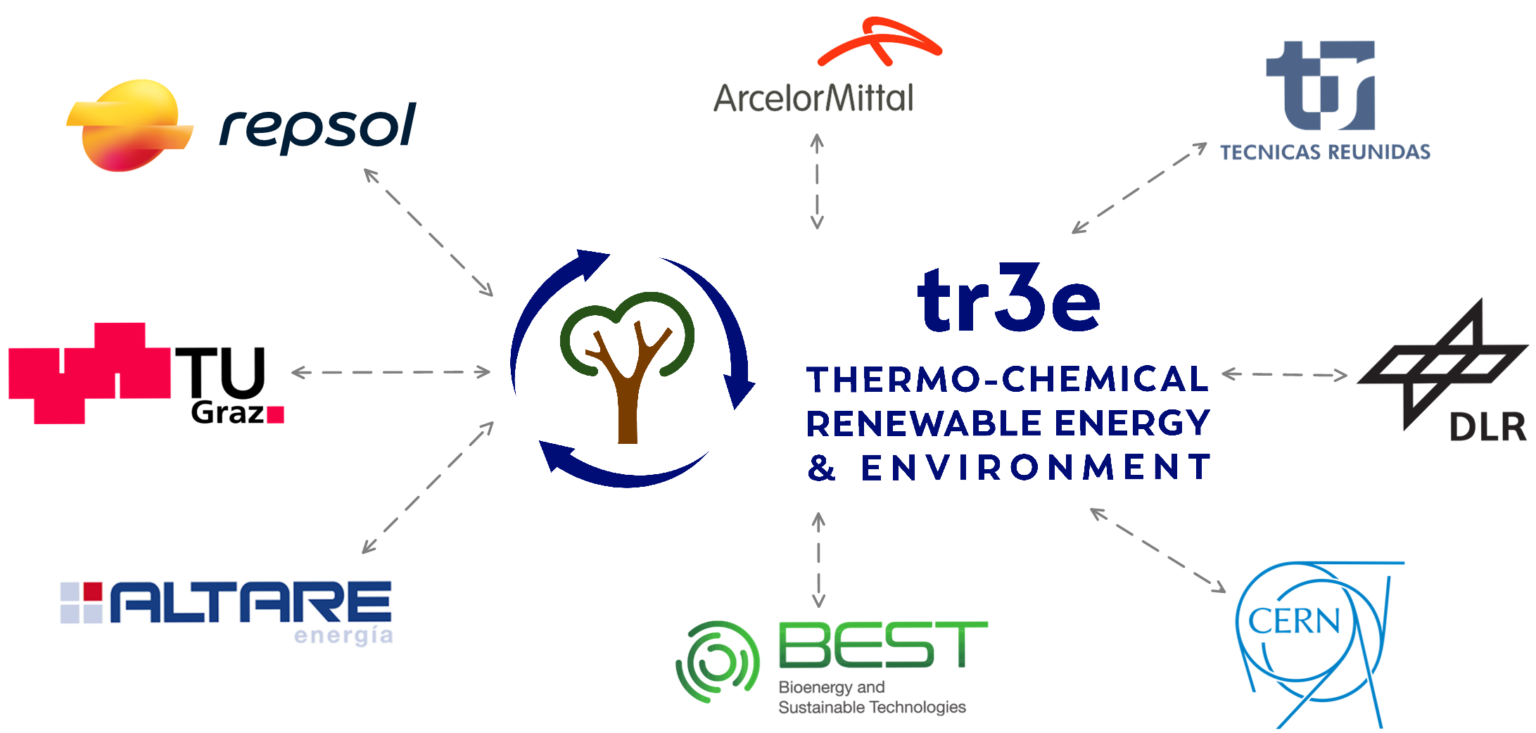
To date, the tr3e Thermo-chemical REnewable Energy & Environment research group has developed and participates in several projects.
Industrial Consulting / R&D Services
The project in a nutshell
Funding: Private Companies & Research Centers
Period: Ongoing
Research team: José Félix Guil-Pedrosa, Eduardo Cano-Pleite, Luis Miguel García-Gutiérrez, Andrés Anca-Couce, Antonio Soria-Verdugo
Description
TR3E provides scientific and technical consulting services to industrial partners, supporting the development of innovative energy technologies from fundamental research to industrial application. Our expertise combines advanced experimental facilities with state-of-the-art modelling capabilities to address complex challenges in thermochemical conversion, renewable fuels and energy systems.
We collaborate with companies through contract research, process design and optimization, laboratory testing, numerical modelling, technology assessment, feasibility studies, and specialized technical training, delivering solutions based on rigorous scientific and engineering principles.
Key expertise:
- Thermochemical conversion of biomass and waste
- Waste-to-energy technologies
- Gasification, pyrolysis and combustion
- Renewable and synthetic fuels
- Carbon capture, utilization and storage (CCUS)
- Defossilization of industrial processes
- Thermal/Thermochemical energy storage
- Enhanced heat transfer and thermal systems
- Experimental testing and advanced process characterization
- Process modelling and simulation
- CFD modelling and multiphase flow simulation
- Process design, optimization and scale-up
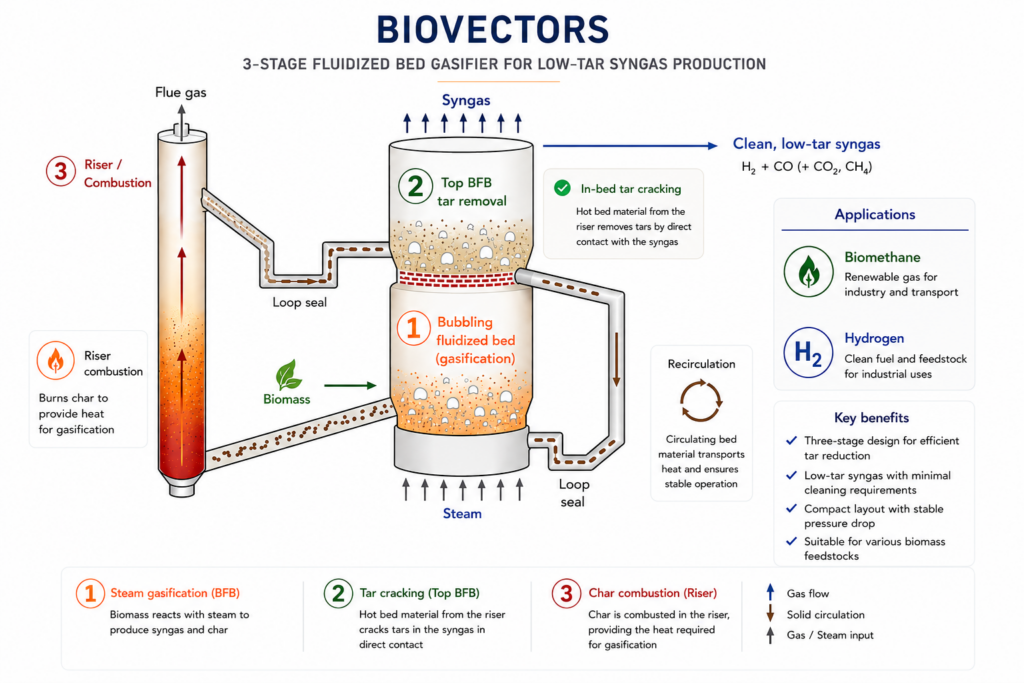
BIOVECTORS – Production of bioenergy vectors in a novel fluidized bed biomass gasifier
The project in a nutshell
Funding: Agencia Estatal de Investigación (AEI – Spain)
Reference: PID2023-152868OB-I00
Period: 01/09/2024 - 31/08/2028
Principal investigators: Andrés Anca-Couce, Antonio Soria-Verdugo
Research team: Ulpiano Ruiz-Rivas Hernando, Eduardo Cano-Pleite, Luis Miguel García-Gutiérrez, Fernando Hernández-Jiménez
Description
Mission: Develop next-generation biomass gasification technologies to convert renewable biomass into clean syngas for the production of advanced renewable fuels.
Innovation: Pioneer a novel three-stage fluidized bed gasifier that integrates steam gasification, char combustion, and in-bed tar cracking to produce high-quality, low-tar syngas in a compact reactor design.
Impact: Enable the efficient synthesis of biomethane, biohydrogen and other advanced biofuels while reducing gas cleaning requirements, contributing to the defossilization of industry and transport through sustainable bioenergy solutions.
Approach: Combine advanced experimental research with high-fidelity numerical modelling to understand, optimize, and validate the multi-stage gasification process from laboratory to industrial application.
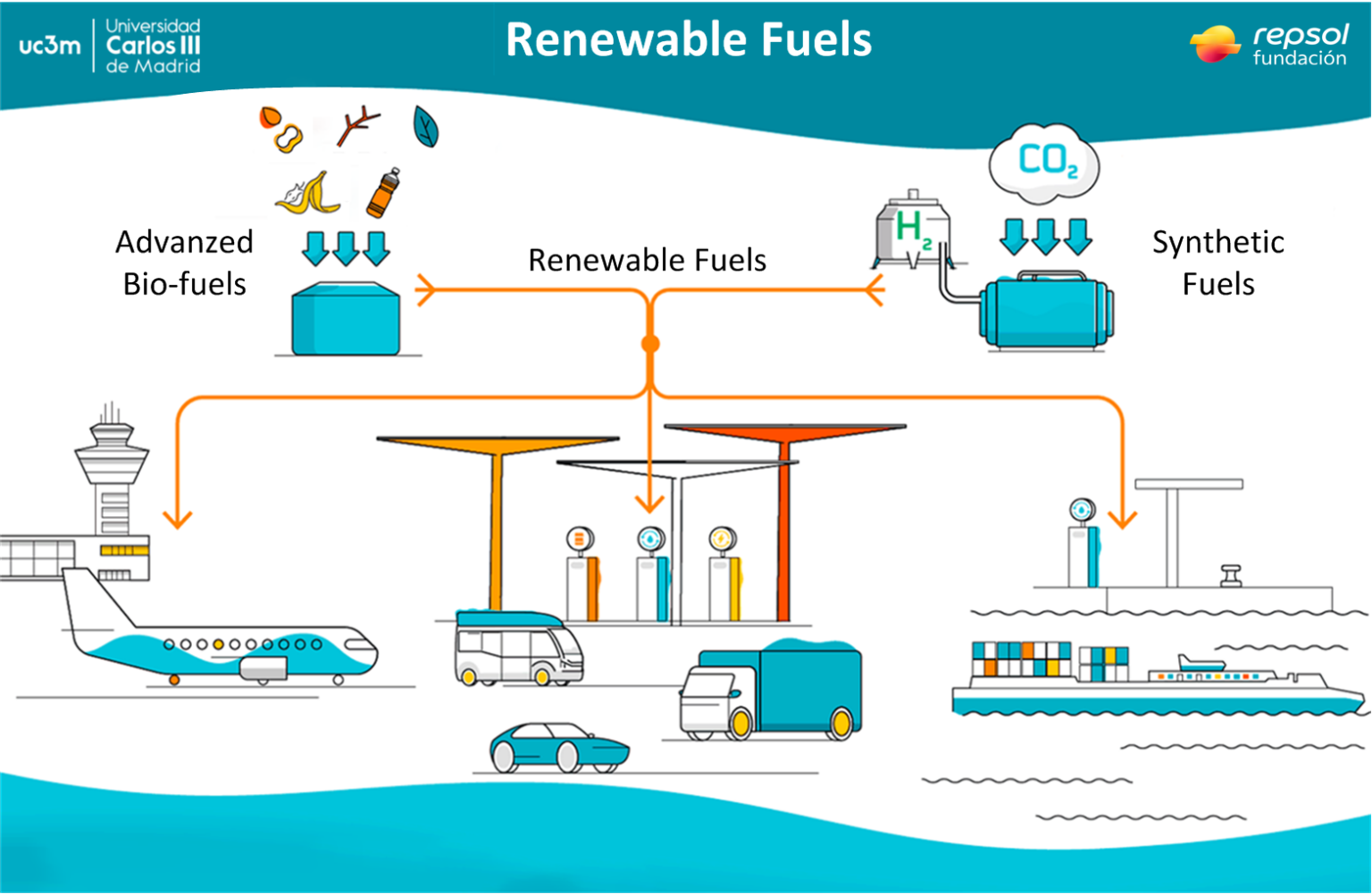
Chair of Renewable Fuels – Fundación Repsol
The project in a nutshell
Funding: Fundación Repsol
Period: 01/09/2024 - 31/08/2027
Directors: Andrés Anca-Couce, Antonio Soria-Verdugo
Research team: José Félix Guil-Pedrosa, Eduardo Cano-Pleite, Luis Miguel García-Gutiérrez
External web: Cátedra Fundación Repsol de Combustibles Renovables
Description
Mission: Advance renewable fuels through excellence in research, education, and public engagement, fostering the transition towards a more sustainable energy system.
Innovation: Connect academia, industry, and society by combining cutting-edge research, student training, technology transfer, and science communication within a long-term university–industry partnership.
Impact: Generate scientific knowledge, educate highly skilled professionals, and promote informed public discussion to accelerate the adoption of renewable fuels across the energy, transport, and industrial sectors.
Approach: Integrate multidisciplinary research, hands-on education, industrial collaboration, and outreach activities to transform scientific advances into real-world solutions and societal impact.
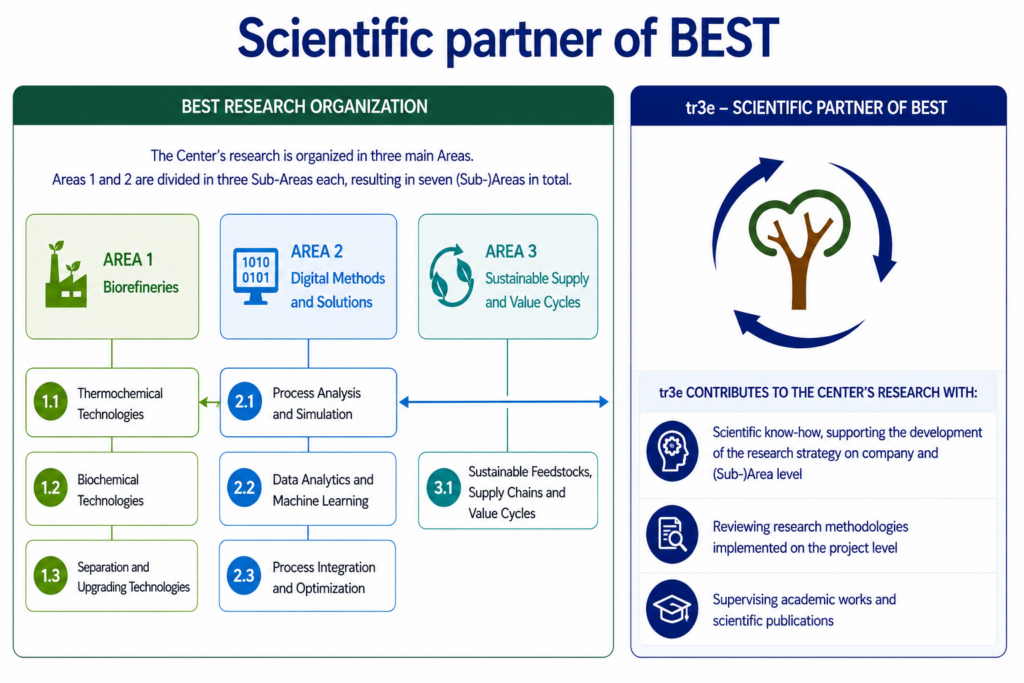
Scientific partner of BEST - Bioenergy and Sustainable Technologies
The project in a nutshell
Funding: BEST - Bioenergy and Sustainable Technologies, Austrian Research Promotion Agency (FFG – Austria)
Period: 01/04/2023 - 31/03/2027
Principal key researcher: Andrés Anca-Couce
Research team: José Félix Guil-Pedrosa, Eduardo Cano-Pleite, Luis Miguel García-Gutiérrez, Antonio Soria-Verdugo
Description
Mission: Support BEST Bioenergy and Sustainable Technologies’s research excellence by providing scientific leadership in thermochemical technologies and process analysis to accelerate the development of sustainable bioenergy solutions.
Innovation: Contribute scientific expertise to research strategy, project methodology, and advanced process analysis, strengthening innovation across BEST’s thermochemical technologies analysis and simulation.
Impact: Enhance the scientific quality, industrial relevance, and academic excellence of BEST through strategic guidance, methodological review, and supervision of research and scientific results.
Approach: Collaborate closely with BEST subareas 1.1 – Thermochemical Technologies and 2.1 Process Analysis and Simulation as key researcher and with industrial partners by supporting research planning, reviewing methodologies, and mentoring academic work to maximize scientific and technological impact.
Bio-Inspired Constructal Cooling Systems for Advanced Battery Thermal Management
The project in a nutshell
Period: 01/01/2022 - 31/12/2026
Principal investigators: Mariano Rubio-Rubio, Luis Miguel García-Gutiérrez
Research team: Inmaculada Iglesias-Estrade, Néstor García-Hernando, José Félix Guil-Pedrosa, Eduardo Cano-Pleite, Andrés Anca-Couce, Antonio Soria-Verdugo
Description
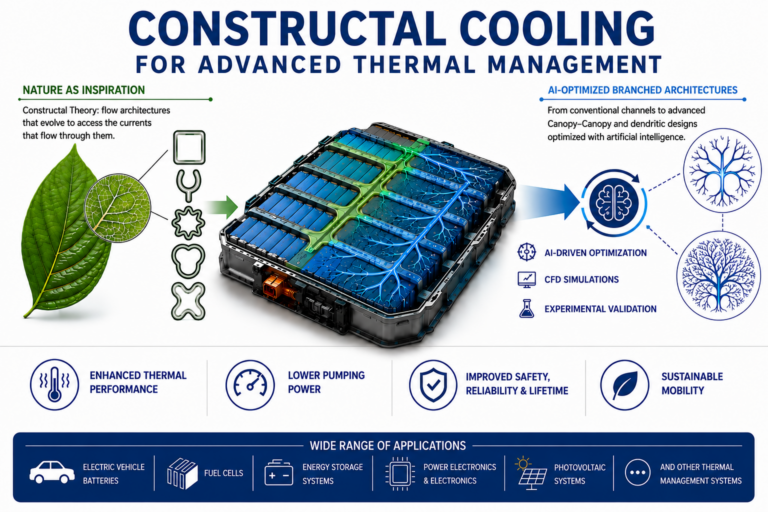
Mission: Develop next-generation liquid cooling systems for electric vehicle batteries by combining bio-inspired channel architectures, advanced thermal sciences, and artificial intelligence to maximize cooling efficiency.
Innovation: Progress from nature-inspired single-channel designs to hierarchical Canopy-to-Canopy and dendritic flow architectures, optimized through CFD, experimental validation, and AI-assisted design methodologies.
Impact: Enable safer, faster-charging, and longer-lasting battery systems by improving heat dissipation while minimizing pumping power, contributing to more efficient and reliable electric mobility.
Approach: Integrate Constructal Theory, heat transfer, fluid mechanics, artificial intelligence, numerical simulations, and experimental testing to design, optimize, and validate advanced liquid cooling technologies for future battery thermal management.
MOBIOSYS – Modular Bioenergy Systems
The project in a nutshell
Funding: Agencia Estatal de Investigación (AEI – Spain)
Reference: TED2021-131962B-I00
Period: 01/12/2022 - 30/11/2024
Principal investigators: Andrés Anca-Couce, Antonio Soria-Verdugo
Research team: Ulpiano Ruiz-Rivas Hernando, Eduardo Cano-Pleite, Luis Miguel García-Gutiérrez, Fernando Hernández-Jiménez
Description
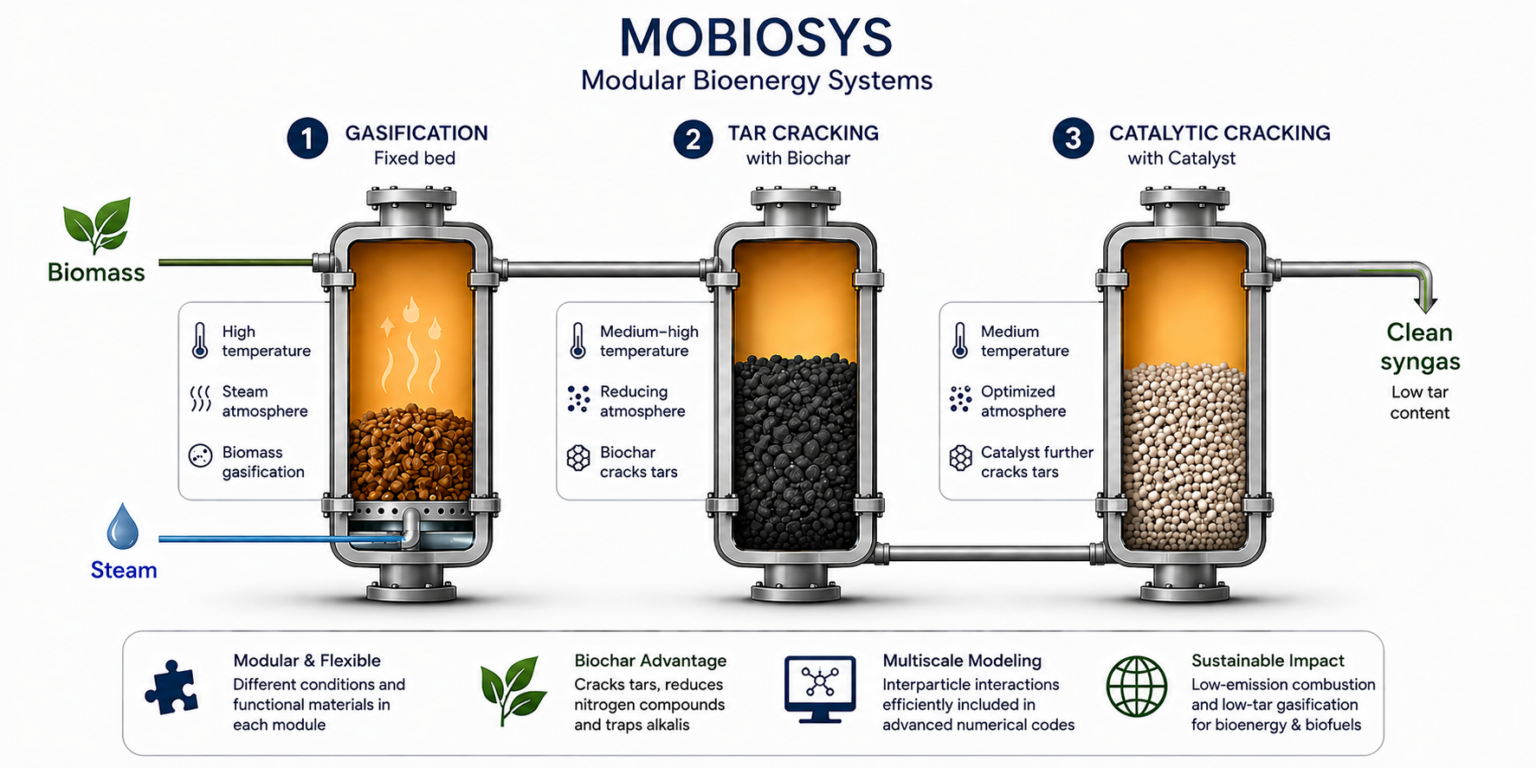
Mission: Develop next-generation modular biomass conversion systems to transform renewable biomass into cleaner syngas through advanced reactor design and biochar-assisted gas upgrading.
Innovation: Pioneer a novel three-stage modular reactor that integrates steam gasification, biochar-based tar cracking, and catalytic gas upgrading, while exploiting interparticle interactions to enhance biomass conversion and syngas quality.
Impact: Enable the production of cleaner syngas for renewable electricity, hydrogen, and advanced biofuels while reducing tar content, gas cleaning requirements, and pollutant emissions in future biomass conversion systems.
Approach: Combine the design of flexible modular reactors with advanced experimental research and multi-scale numerical modelling to understand, optimize, and exploit interparticle interactions from particle to reactor scale.
BioGEC - Wet Biomass Conversion to Green Energy Carriers
The project in a nutshell
Funding: Agencia Estatal de Investigación (AEI – Spain)
Reference: CNS2022-136012
Period: 01/09/2023 - 31/08/2025
Principal investigator: Andrés Anca-Couce
Research team: Nestor García-Hernando, Eduardo Cano-Pleite, Luis Miguel García-Gutiérrez, Antonio Soria-Verdugo
Description
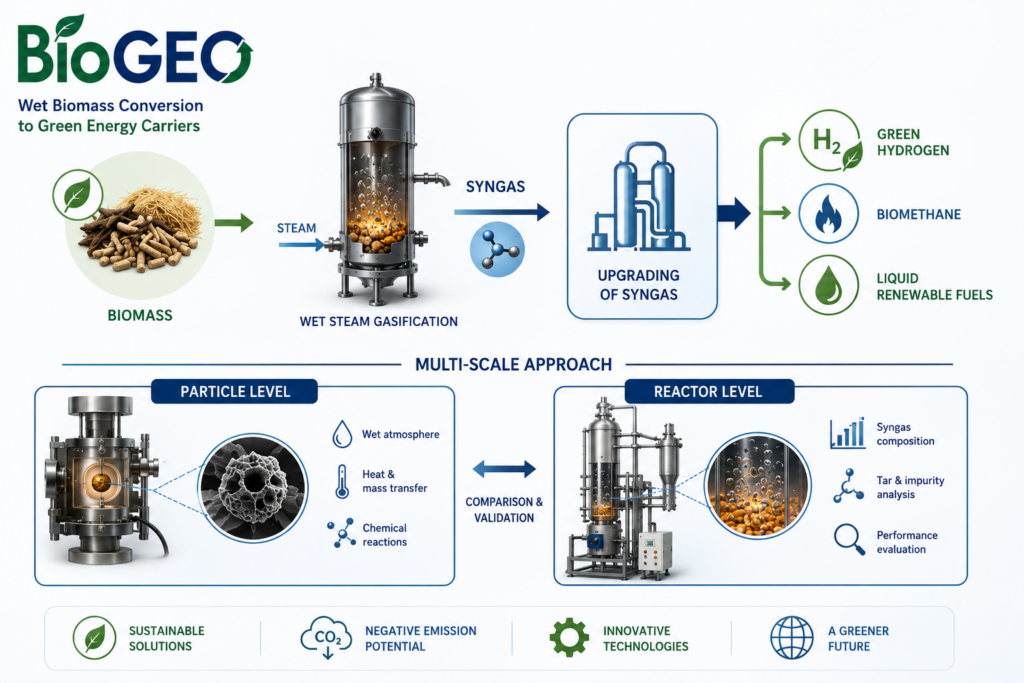
Mission: Develop advanced wet thermochemical conversion technologies to transform biomass into renewable energy carriers, including green hydrogen, biomethane, and liquid renewable fuels.
Innovation: Advance biomass steam gasification and syngas upgrading through a unique multi-scale approach that links single-particle conversion with fluidized bed reactor performance under wet operating conditions.
Impact: Generate the scientific knowledge needed to enable efficient syngas upgrading and the sustainable production of renewable fuels, supporting negative-emission pathways and the defossilization of the energy and industrial sectors.
Approach: Combine innovative experimental facilities at both particle and reactor scales to investigate heat and mass transfer, chemical reactions, and syngas quality, providing the foundations for next-generation biomass conversion technologies.
SHE - Smart Home Energy: Development of an integrated and mobile solution for low-cost cooking and power generation
The project in a nutshell
Funding: LEAP-RE H2020 programme
Period: 01/07/2023 - 30/06/2025
Coordinator: Graz University of Technology
Cooperation Project. Participation as associated partner
External web
Description
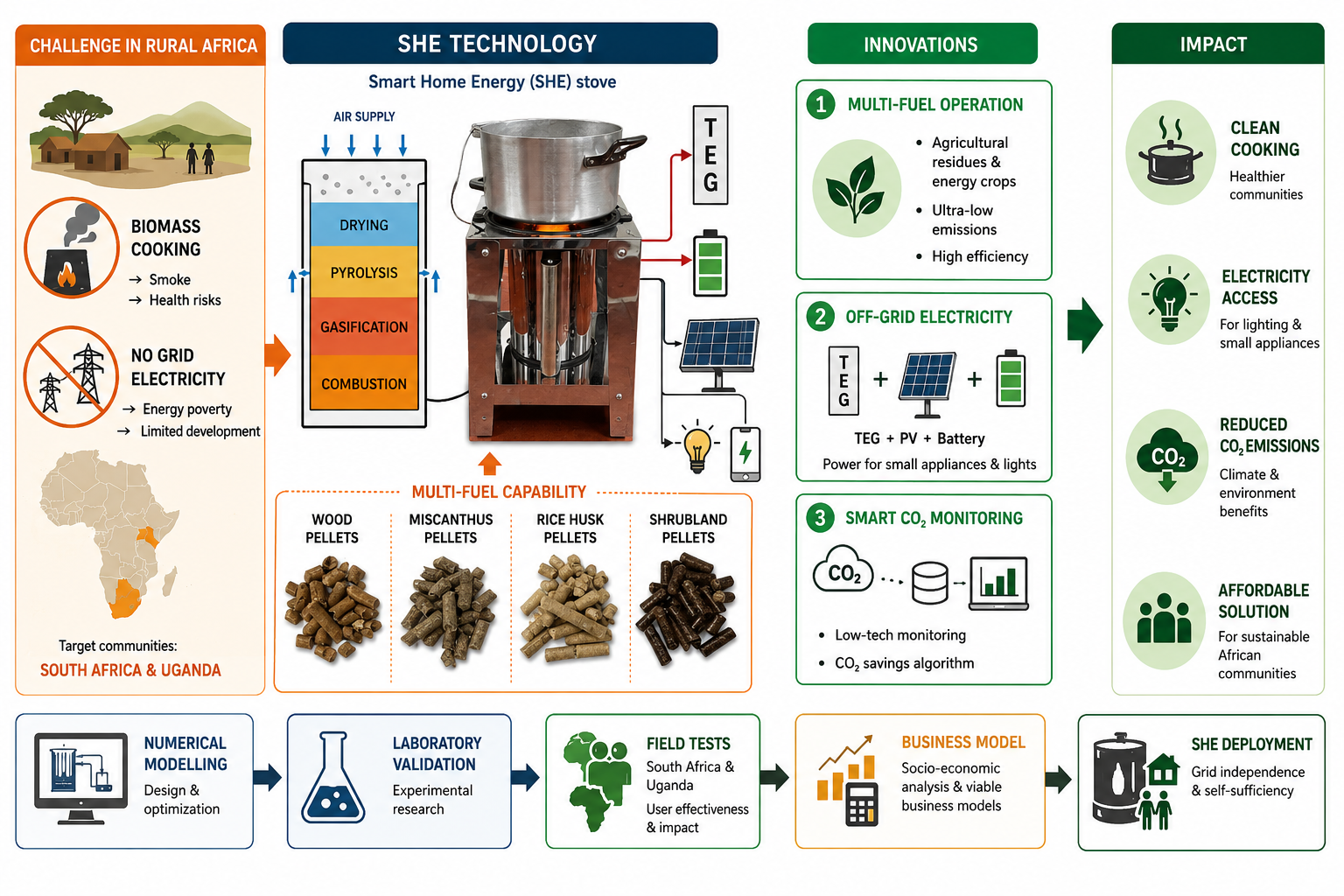
Mission: Develop an affordable Smart Home Energy (SHE) system that provides clean cooking, heating and off-grid electricity for isolated rural communities in Africa, improving energy access while reducing health risks and environmental impacts.
Innovation: Combine a high-efficiency micro-gasifier cookstove with multi-fuel capability, thermoelectric power generation (TEG), solar PV integration and a smart CO₂ savings monitoring system, enabling clean and self-sufficient household energy.
Impact: Deliver a reliable and affordable energy solution that reduces emissions, expands the use of locally available biomass resources, increases energy independence and supports sustainable development in rural communities.
Approach: Integrate numerical modelling, laboratory experiments, technology adaptation to local conditions, field demonstrations in South Africa and Uganda, and socio-economic assessment to optimize system performance and deployment strategies.
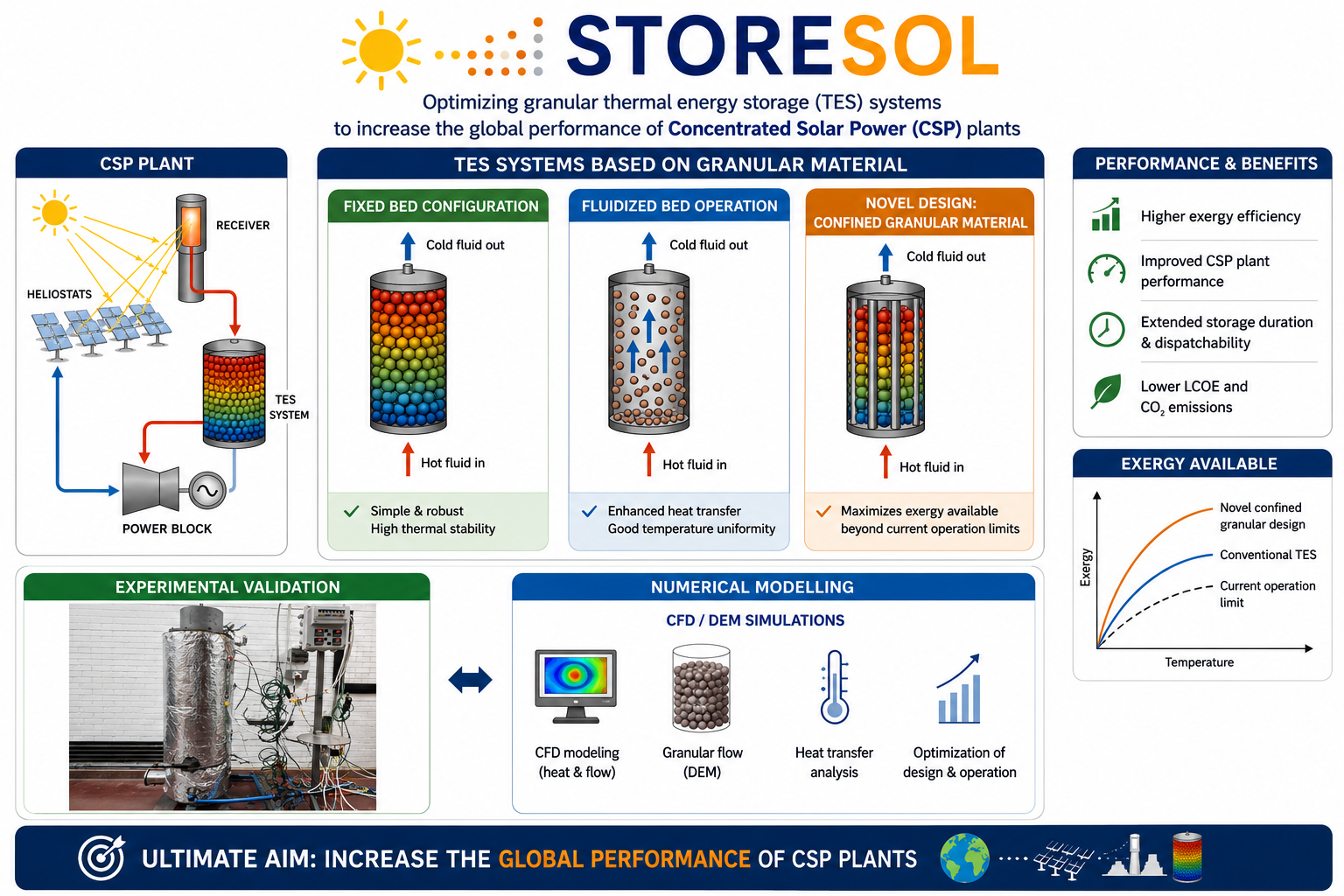
STORESOL - Optimal design of the sensible heat storage system of a central receiver solar power plant operating with gas cycles
The project in a nutshell
Funding: Agencia Estatal de Investigación (AEI – Spain)
Reference: PID2019-109224RA-100
Period: 01/06/2020 - 29/02/2024
Principal investigators: Fernando Hernández-Jiménez, Antonio Soria-Verdugo
Research team: Ulpiano Ruiz-Rivas Hernando, Eduardo Cano-Pleite, Luis Miguel García-Gutiérrez
Description
Mission: Advance renewable fuels through excellence in research, education, and public engagement, fostering the transition towards a more sustainable energy system.
Innovation: Connect academia, industry, and society by combining cutting-edge research, student training, technology transfer, and science communication within a long-term university–industry partnership.
Impact: Generate scientific knowledge, educate highly skilled professionals, and promote informed public discussion to accelerate the adoption of renewable fuels across the energy, transport, and industrial sectors.
Approach: Integrate multidisciplinary research, hands-on education, industrial collaboration, and outreach activities to transform scientific advances into real-world solutions and societal impact.